


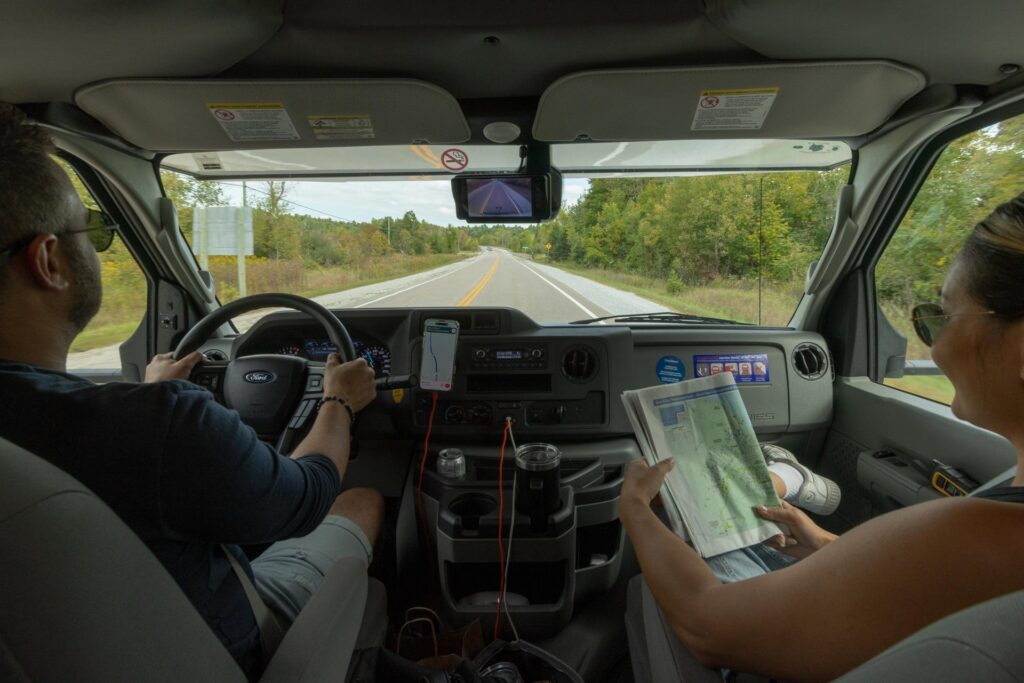
Trip planning for Ontario looks different depending on who you ask.
New qualitative research from Destination Ontario and Context Research Group Inc. (CRG) sheds light on how leisure travellers across domestic, U.S., and international markets navigate the journey from early inspiration to in-destination decisions. The findings point to clear opportunities for tourism organizations to reduce friction, meet travellers where they are, and ultimately drive stronger visitation outcomes.
Travellers Use Multiple Tools and Switch Between Them Often
Ontario travellers do not rely on a single source to plan their trips. They move across Google, social media, booking platforms, maps, AI tools, and personal recommendations, using each for different purposes at different moments in the journey. Younger travellers (under 40) show a stronger openness to newer digital formats, but tool-switching is common across all age groups.
This has an important implication for the industry: trip planning is not linear. Travellers piece together information from many places, and Ontario needs to show up clearly and consistently across all of them.
Planning Unfolds in Four Distinct Stages and Friction Builds Over Time
The research identifies four stages in the traveller planning journey: Early Inspiration, Booking and Logistics, Final Planning, and In-Destination. Each stage carries different goals, behaviours, and pain points.
Early inspiration is exploratory and relatively low-friction, travellers are browsing, comparing destinations, and forming impressions through Google, Instagram, YouTube, blogs, and word of mouth.
Booking is more transactional, with travellers comparing prices and reviews across platforms like Booking.com, Expedia, Airbnb, and TripAdvisor. Friction here is moderate, driven largely by an overwhelming volume of options and inconsistent information.
Final Planning is where friction peaks. Travellers are trying to narrow choices, structure itineraries, map routes, and feel confident they are making the right calls, often with less time and more complexity than earlier in the process.
Once in destination, travellers shift to speed and convenience, relying on Google Maps, quick searches, and local sources to make real-time decisions.
AI Is Present Across the Journey, But Human Support Still Matters
AI tools appear consistently across all four planning stages, particularly for early-stage idea generation and itinerary building. However, as planning complexity increases, self-serve and AI tools begin to fall short.
When itineraries grow detailed, options become harder to compare, or travellers need confidence in a specific decision, human support becomes significantly more valuable. What travellers are looking for at that point is not generic information, it is local knowledge, up-to-date practical context, and personalized suggestions tailored to their specific trip.
The implication for tourism organizations is clear: the goal is not to replace digital tools, but to position human support at the moments when those tools reach their limits.
Why Travellers Choose Ontario Depends on Where They Come From
Domestic and U.S. travellers most often choose Ontario for proximity, convenience, and practicality. It is close, drivable, and easy to act on. Some Canadian travellers also noted Ontario as a preferred alternative to U.S. travel given current geopolitical tensions, a sentiment that aligns with broader tracking data showing increased hesitation among Canadians about travelling south of the border.
International travellers from the U.K. and Germany approach Ontario differently. For them, the trip is a deliberate choice to experience Canada, its natural landscapes, iconic destinations, and broader travel offerings. Major events, including FIFA World Cup 2026™, are also a draw for this group.
Planning Styles Follow the Same Divide
Domestic and U.S. travellers tend to plan closer to departure, with looser itineraries and more flexibility built in. They typically have a destination and travel party in mind but leave the details open. International travellers, by contrast, plan further in advance and prefer fixed, detailed itineraries with accommodations, tickets, and attractions confirmed well before they travel.
What This Means for the Industry
Across every stage and every market, one theme runs through the research: travellers want information that is easy to find, easy to trust, and easy to act on. Whether it is inspirational content in the early stages, consistent listings during booking, clear itineraries during final planning, or real-time local guidance in destination, the opportunity for Ontario’s tourism industry lies in reducing the effort it takes to choose Ontario, and to keep choosing it throughout the trip.
Download the April 2026 Ontario Travel & Tourism Monthly report and more studies on the Destination Ontario Insights Portal.
